2026 Top Automatic Wire Coiling Machine Suppliers?
Selecting the right automatic wire coiling machine supplier in 2026 requires more than comparing catalog prices.
Grand View Research estimates the global wire and cable machinery market at approximately USD 1.9 billion in 2023. Its outlook also indicates steady growth through 2030. Fortune Business Insights valued the broader wire and cable market at more than USD 200 billion in 2023. These figures suggest sustained investment in forming, winding, and automated handling equipment. However, they do not guarantee equal supplier quality.
A serious evaluation should examine coil diameter range, wire tension control, changeover time, servo accuracy, and after-sales support. Ask for production samples. Request cycle-time records. Inspect the finished coil, including its pitch, edge alignment, and compression. A machine may look impressive under showroom lighting. Factory dust tells a different story.
Andreas Wafios, an industry executive associated with WAFIOS, captures one practical standard: “Automation must be judged by repeatability, not speed alone.” That principle matters when selecting the top automatic wire coiling machine suppliers for 2026. High speed without stable tension can create costly rejects, tangled coils, and inconsistent packaging.
This comparison will review supplier experience, machine architecture, customization ability, safety practices, spare-parts access, and documented customer performance. The ranking cannot be perfectly universal. A medical-wire producer needs different controls than a spring-wire manufacturer. That limitation deserves attention. Regional service coverage, operator training, and integration with existing lines may influence the final decision more than brand reputation.
Automatic Wire Coiling Machines: Types, Applications, and 2026 Market Scope
Automatic wire coiling machines will serve a wider range of production needs in 2026. Common types include CNC coilers, spring coilers, and toroidal winding systems. Each design handles different wire diameters, coil shapes, and tension requirements.
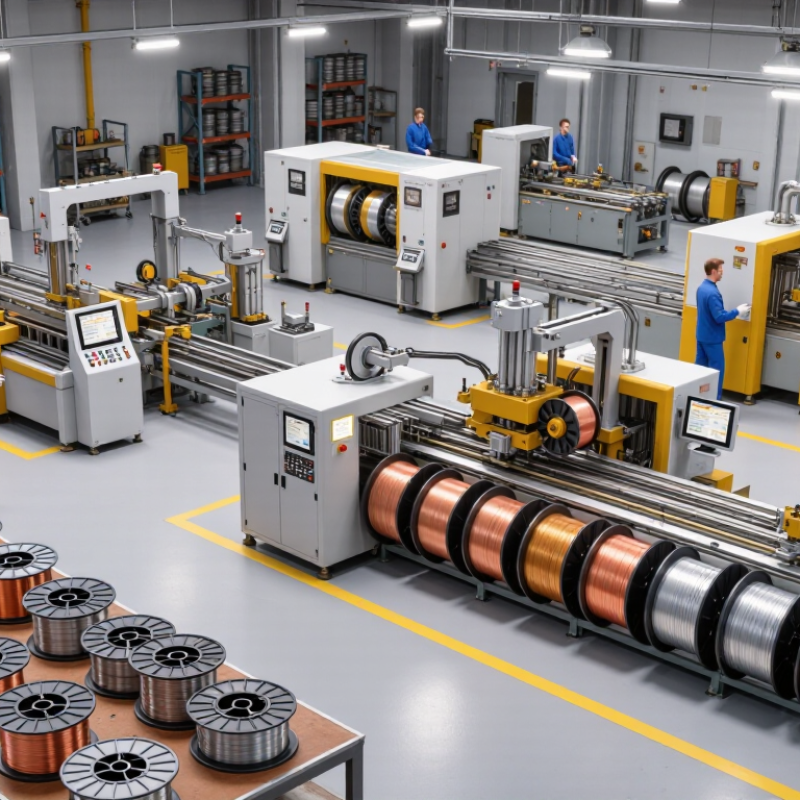
These machines support cable harnesses, motor components, transformers, solenoids, and electrical assemblies. In a typical workshop, sensors control wire tension while programmable guides maintain consistent spacing. This reduces manual handling and improves repeatability. However, results still depend on setup quality, operator training, and material stability. A capable supplier should provide trial production, maintenance guidance, spare parts, and clear performance data. Claims without sample testing deserve caution.
Tips: Check the complete wire range, coil dimensions, line speed, and changeover time. Ask suppliers to test your actual wire, not a similar sample. Inspect the control interface and safety functions before purchase. Energy use and after-sales response will matter more as production costs rise.
The 2026 market will likely favor flexible machines with digital monitoring and quick tooling changes. Demand should grow among manufacturers seeking higher output and traceable quality. Small factories may prefer compact systems, while large plants may require automated feeding and inspection. Regional investment patterns remain difficult to predict. Forecasts are useful, but real production trials are more reliable.
Key Specifications: Wire Diameter, Coil Size, Speed, and ±0.1 mm Accuracy
2026 Top Automatic Wire Coiling Machine Suppliers?
Selecting an automatic wire coiling machine starts with the wire diameter range. A machine should handle your smallest and largest wires without frequent tooling changes. Ask for verified results using your actual material, not only catalog samples. Surface finish, hardness, and springback can alter feeding stability.
Coil size matters just as much. Confirm the minimum inner diameter, maximum outer diameter, coil width, and allowable weight. A compact coil may need tighter tension control. Larger coils require stronger support and smoother torque management. Production speed should be measured in finished coils per minute, not only motor rotation speed. Fast running is useless when the line creates tangles or uneven pitches.
Accuracy deserves careful discussion. A specification of ±0.1 mm sounds precise, but suppliers should define the measured feature, method, and operating conditions. Is the tolerance for coil diameter, pitch, or cut length? Request inspection records from continuous production. Check samples at startup and after several hours. Small drift can appear with heat, tool wear, or changing wire batches. This is where many comparisons become imperfect. A supplier with clear testing procedures is usually more reliable than one offering the highest headline speed. A practical trial often reveals more than a polished brochure.
Supplier Evaluation: CNC Axes, Servo Control, ISO 9001, and CE Compliance
Choosing a top automatic wire coiling machine supplier in 2026 requires more than comparing prices. The control architecture matters. CNC axes should match coil diameter, pitch, cutting, feeding, and forming requirements. More axes can improve flexibility, but they may increase setup time and maintenance. Ask for production samples using your wire size, spring geometry, and target speed.
Servo control deserves close inspection. Look for closed-loop positioning, encoder feedback, stable tension control, and repeatable acceleration. The International Federation of Robotics reported 541,302 industrial robot installations worldwide in 2023, a 10% annual increase. This growth reflects stronger demand for precise automation, but it does not guarantee better coil quality. Request cycle-time records, rejection data, and maintenance logs from comparable applications.
Quality evidence should include a valid ISO 9001:2015 certificate, controlled drawings, calibration records, and documented corrective actions. The ISO Survey 2022 recorded more than 1.26 million ISO 9001 certificates worldwide, so certification alone is not enough. Verify the certificate scope and issuing body. For European sales, CE compliance should include risk assessment, electrical safety checks, technical documentation, and a Declaration of Conformity. CE is not a performance award. Scores can mislead. A supplier may present polished documents while overlooking wire scratches, coil distortion, or unstable feeding during long runs. Witness a factory acceptance test, measure ten consecutive coils, and inspect the results under normal production conditions.
2026 Top Supplier Profiles: Capacity, Automation, Lead Times, and Support
Choosing an automatic wire coiling machine supplier in 2026 requires more than comparing catalog prices. A credible supplier profile should show verified production capacity, testing records, and experience with your wire diameter range. Ask how many machines leave the workshop each month. Request videos or inspection reports showing tension control, coil counting, and emergency-stop checks. Capacity is not only factory size. It also includes engineering availability during peak orders. Some suppliers quote impressive output, yet their assembly lines remain heavily manual. That difference matters.
Lead times should include design approval, component sourcing, assembly, testing, and shipment preparation. A realistic quotation might separate standard machines from customized feeding systems. Automation claims also need measurable details, such as automatic wire straightening, programmable coil length, sensor feedback, and fault alarms. During factory discussions, ask for cycle-time data using wire similar to yours. I would not rely on a polished demonstration alone. Product trials can expose uneven winding, heat buildup, or difficult software settings. These details are easy to overlook.
Tips: Compare support response times, spare-parts availability, remote diagnosis, and operator training. Ask whether manuals include wiring diagrams and maintenance intervals. Keep a written acceptance checklist. It may feel excessive, but vague requirements create expensive arguments later. Also, leave room for uncertainty; promised performance can change with material hardness, coil size, and operator skill.
2026 Top Automatic Wire Coiling Machine Suppliers
Supplier Profile Evaluation Framework: Capacity, Automation, Lead Times, and Support
Illustrative evaluation weights only—not verified supplier data or market statistics. Confirm production capacity, automation options, quoted lead times, and after-sales support directly with each supplier.
Purchasing Metrics: Energy Use, Uptime Above 95%, Warranty, and ROI over 3 Years
When comparing suppliers for a 2026 automatic wire coiling machine, look beyond rated speed. Ask for energy consumption in kilowatt-hours per production shift, measured while forming your actual wire diameter and coil size. A machine running quickly may still waste power during idle periods or frequent changeovers. Request a monitored trial, not just a brochure estimate.
Uptime above 95% sounds strong, but define how it is calculated. Does the figure include planned maintenance, setup, and material changes? Ask for service records, spare-part lead times, and references from plants with similar workloads. Review warranty coverage for controls, motors, and wear components separately. A broad warranty can have exclusions; read them carefully. Real production is messier than a demonstration.
Tips: Compare three-year ROI using your own labor, energy, scrap, and maintenance costs. Include installation and training. Test several shifts if possible, and record downtime causes. A supplier should explain assumptions clearly. If projected savings depend on perfect uptime, revise the estimate. That may feel cautious, but it protects the purchase decision.
Related Posts
-
What Is the Best Automatic Wire Coiling Machine in China?
-
7 Best Automatic Wire Coiling Machines for Global Buyers
-
Top Air Coil Winding Machines in China for Global Buyers
-
2026 Top Motor Winding Coil Machine Innovations and Trends?
-
Top Automatic Winding Machines for Global Buyers?
-
How to Choose the Best Programmable Coil Winding Machine for Your Needs