7 Best Automatic Wire Coiling Machines for Global Buyers
Choosing the right automatic wire coiling machine can shape production speed, coil consistency, labor costs, and customer satisfaction. Global buyers face a crowded market. Similar machines may differ sharply in tension control, feeding accuracy, tooling flexibility, and after-sales support.
Wire-processing specialist Laura Chen explains, “A reliable coiler should protect wire quality while making repeatable production easier.” That principle matters on a busy factory floor. A stable machine should guide wire smoothly, create even coils, and stop accurately when the programmed length is reached. Operators also need clear controls, accessible changeover points, and practical safety features. Small details matter.
This guide reviews seven automatic wire coiling machine options for international buyers. The comparison considers wire diameter range, coil dimensions, output speed, motor control, automation level, and maintenance access. It also examines documentation, voltage compatibility, spare-parts availability, and technical support. These points can prevent expensive surprises after installation.
No machine is perfect. A high-speed model may require more setup discipline. A compact unit may limit larger coil sizes. A lower purchase price may hide training or tooling costs. Buyers should measure their actual wire types, target volumes, available floor space, and future product plans before deciding. A machine that performs well with soft copper wire may not handle stiff steel wire equally well. That difference is easy to overlook.
The best choice is not always the fastest option. It is the machine that delivers dependable coils, manageable operation, and measurable value over time. This overview offers practical guidance, but local testing remains wise before a major purchase.
What Automatic Wire Coiling Machines Are and How They Work
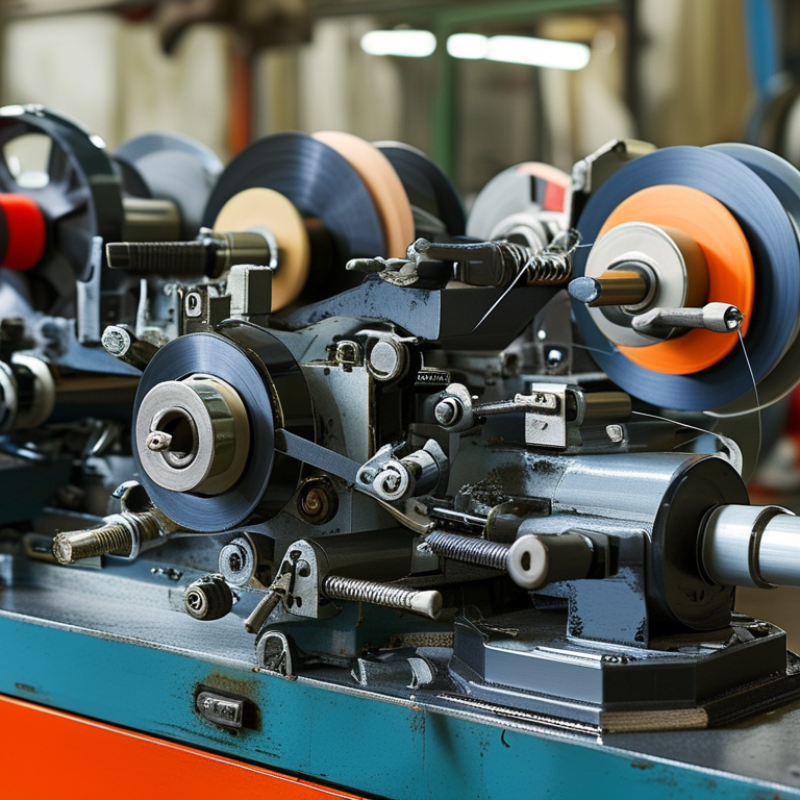
Automatic wire coiling machines form long wire into controlled, repeatable coils. They are used in cable preparation, spring production, electrical assembly, and packaging operations. Unlike manual winding, the machine coordinates feeding, guiding, rotating, and cutting through programmed controls. A typical unit includes a payoff reel, straightening rollers, feed wheels, a rotating mandrel, and a cutting mechanism. Some systems also use tension sensors and length encoders. These parts work together. The goal is stable coil diameter, pitch, and wire length.
During operation, wire leaves the payoff reel and passes through guides that reduce lateral movement. Feed wheels push it forward at a measured speed. At the same time, the mandrel rotates to create each turn. Changing feed speed or rotation changes the coil pitch. A controller stores these settings for different wire sizes. Sensors can detect slippage, unusual tension, or an empty reel, then pause the cycle. The operator usually checks the first coil with calipers and a length gauge. That small inspection matters.
In practical installations, setup quality often decides the result more than machine speed. The wire must match the guide, mandrel, and tension range. Wrong alignment can produce loose edges, crossed turns, or surface marks. I have seen operators correct these faults by reducing speed and adjusting roller pressure. However, automatic settings are not always correct. Wire hardness, insulation thickness, and reel condition can change the outcome. Cleaning feed wheels and checking guards should be part of routine maintenance. Keep hands away from rotating parts. Training, clear work instructions, and traceable inspection records improve reliability for buyers comparing machines across production sites.
Key Features to Compare Before Choosing a Wire Coiling Machine
7 Best Automatic Wire Coiling Machines for Global Buyers
Key Features to Compare Before Choosing a Wire Coiling Machine
Machine speed attracts attention, but production stability matters more. The International Federation of Robotics recorded 541,302 industrial robot installations worldwide in 2023. This growth shows stronger demand for repeatable automation. However, a fast coiling machine may slow during wire loading, cutting, or coil unloading. Ask suppliers for verified output using your wire type, diameter, insulation, and target coil size. Published speed often reflects empty-run testing. That detail deserves careful review.
Compare wire compatibility first. Check the supported diameter range, minimum bending radius, feeding accuracy, and tension control. Poor tension can create loose turns, crushed insulation, or uneven coil edges. Servo-driven feeding usually offers finer control than basic mechanical systems. Yet servo control alone does not guarantee quality. Request sample coils and measure their outer diameter, weight, and turn count. Small differences can affect downstream assembly.
Changeover time also influences total cost. A practical machine should allow clear parameter storage, tool-free adjustments where possible, and accessible wear parts. The U.S. Department of Energy reports that motor-driven systems represent roughly 45% of global electricity use, making energy monitoring commercially relevant. Examine motor efficiency, standby consumption, and compressed-air demand. Safety should follow ISO 12100 risk-assessment principles and IEC 60204-1 electrical requirements. Do not accept certificates without checking their scope. One overlooked issue is operator training. A sophisticated interface can still produce inconsistent coils when settings are poorly documented.
Seven Leading Automatic Wire Coiling Machines for Global Buyers
Global buyers often compare seven leading automatic wire coiling machines by production needs, not appearance. The high-speed single-spool machine suits repeat orders with steady wire diameter. The precision multi-axis machine handles complex coils, tight pitches, and controlled forming. A toroidal coiler creates ring-shaped components for electrical applications. The cut-and-coil machine measures, cuts, and winds wire in one cycle.
The heavy-gauge coiling machine works with stronger wire and reinforced feeding systems. The fine-wire machine protects delicate materials through low-tension control and guided feeding. The programmable CNC coiler supports varied coil shapes, stored recipes, and quick changeovers. Each option has limits. A catalog speed can mislead.
During equipment assessments, I check actual samples, not only brochures. Buyers should request trials using their wire, insulation, spool size, and target coil dimensions. Watch the first ten pieces closely. Uneven spacing often appears before a full production run. A reliable supplier should provide test records, electrical drawings, maintenance schedules, and operator training. Safety guarding, emergency stops, noise levels, and local voltage compatibility also deserve careful review. Some machines require skilled setup, even when advertised as fully automatic. That gap matters. Spare sensors, forming tools, and feeding rollers should be available near the buyer’s region. Confirm service response times in writing. A lower purchase price may become expensive when small alignment problems stop production.
7 Best Automatic Wire Coiling Machines for Global Buyers - Seven Leading Automatic Wire Coiling Machines for Global Buyers
| Rank | Machine Type | Typical Wire Diameter | Typical Coil Outside Diameter | Typical Production Speed | Wire Materials | Primary Forming Functions | Control and Automation | Recommended Applications | Important Buying Consideration |
|---|---|---|---|---|---|---|---|---|---|
| 1 | CNC Automatic Wire Coiling Machine | 0.5–6.0 mm | 10–150 mm | 20–120 coils/min | Carbon steel, stainless steel, copper and alloy wire | Coiling, pitch control, cut-to-length and programmable end forming | Multi-axis CNC control with stored recipes and automatic length compensation | Compression springs, extension springs, torsion springs and precision wire components | Best for repeatable production with frequent changes in coil diameter and pitch |
| 2 | High-Speed Straight-Line Coiling Machine | 0.8–4.0 mm | 8–80 mm | 40–180 coils/min | Spring steel, stainless steel and galvanized steel wire | Continuous coiling, straightening, feeding and automatic cutting | Servo wire feeding with digital length and speed adjustment | High-volume spring production and standardized coil components | Most suitable when product specifications remain stable for long production runs |
| 3 | Automatic Toroidal Coil Winding Machine | 0.1–2.5 mm | 20–180 mm | 10–60 coils/min | Enamelled copper, bare copper and aluminum wire | Toroidal winding, controlled tensioning, counting and automatic stopping | Microprocessor control with programmable turns and tension parameters | Power inductors, transformers, current sensors and magnetic components | Choose a model with a winding window and core fixture sized for the target ring core |
| 4 | Automatic Cable Take-Up and Coiling Machine | 1.0–20.0 mm cable diameter | 100–600 mm | 5–40 m/min | Flexible copper cable, control cable, coaxial cable and insulated wire | Meter counting, controlled take-up, layer winding and automatic cut-off | PLC control with dancer-arm tension regulation and length presets | Electrical cable, data cable, harness cable and flexible hose packaging | Confirm maximum reel weight, winding width and cable bending radius before purchase |
| 5 | Automatic Spring Coiling and End-Forming Machine | 0.3–5.0 mm | 5–100 mm | 15–100 coils/min | Oil-tempered wire, stainless steel and music wire | Coiling, closed or open ends, hooks, loops and cut-off operations | Servo-driven axes with programmable end-forming sequences | Automotive, appliance, furniture and general industrial springs | Verify tooling compatibility because end geometry usually requires dedicated forming tools |
| 6 | Automatic Armature and Motor Coil Winding Machine | 0.2–1.5 mm magnet wire | 20–120 mm winding diameter | 300–2,000 rpm spindle speed | Enamelled copper and aluminum magnet wire | Layer winding, slot indexing, tension control and programmable turn counting | Servo indexing with digital winding parameters and fault monitoring | Motors, generators, relays, solenoids and electrical actuator components | Look for stable tension control and insulation-safe wire guiding components |
| 7 | Automatic Rebar and Heavy-Gauge Wire Coiling Machine | 4.0–12.0 mm | 300–1,200 mm | 3–15 coils/min | Low-carbon steel, deformed steel and high-tensile wire | Heavy-duty feeding, circular coiling, length counting and automatic discharge | PLC control with hydraulic or servo-assisted feeding and safety interlocks | Construction reinforcement, precast concrete and industrial steel processing | Check floor loading, electrical capacity, maximum coil mass and guarding requirements |
Note: The specifications shown are typical industry ranges for comparison. Actual capacity depends on wire material, tensile strength, coil geometry, tooling, automation configuration and applicable electrical standards.
How to Match Machine Specifications with Different Production Needs
Selecting an automatic wire coiling machine starts with the product, not the machine catalogue. Define wire diameter, material hardness, coil inner diameter, outer diameter, and finished length. A copper wire may need gentler tension control than hardened steel wire. Record the smallest and largest sizes. This range matters. Then estimate daily output, shift hours, and acceptable scrap. Good specifications begin with measured demand.
For high-volume production, prioritize feeding speed, stable servo control, and automatic length counting. Ask for demonstrated speed under your actual wire size, not an empty-machine figure. A machine rated at 100 coils per minute may slow sharply with thicker insulation. Check coil pitch, winding direction, cut accuracy, and changeover time. These details affect labor more than headline speed. If products change often, select adjustable tooling and recipe storage. However, extra automation can raise maintenance complexity. That trade-off deserves an honest calculation.
Global buyers should verify voltage, safety guarding, documentation, spare-part access, and operator training. Confirm whether the machine supports local power standards before ordering. Request sample coils and inspect loose turns, surface marks, and end alignment. Factory trials reveal problems that brochures hide. Leave capacity for future growth, but avoid paying for unused speed. In practice, many buyers overestimate volume during the first year. A smaller, stable machine may prove more reliable. Yet this assumption should be tested against real forecasts.
Installation, Maintenance, Safety, and International Purchasing Factors
7 Best Automatic Wire Coiling Machines for Global Buyers
For global buyers, machine selection begins with installation planning. Confirm the factory floor is level, dry, and strong enough for the equipment. Check voltage, frequency, grounding, and compressed-air requirements before shipment. A mismatch can delay commissioning for weeks. Leave clear space around the coiler for feeding, unloading, and service access. Small errors matter. Request a wiring diagram, foundation drawing, operating manual, and remote setup support in English. Installation should include guarding, emergency-stop testing, sensor calibration, and a controlled trial using the actual wire size.
Maintenance determines whether output stays consistent. Inspect guides, tension rollers, cutting tools, and forming dies during each shift. Remove metal dust before it reaches sensors or moving assemblies. Lubricate only the specified points and record every service action. Replace worn parts before they create uneven coils or sudden stoppages. Operators should use lockout procedures before cleaning or adjustment. Safety training must cover pinch points, rotating components, stored tension, and safe coil removal. Never treat an automatic cycle as harmless.
International purchasing needs more than a quoted machine price. Compare cycle speed, wire diameter range, coil dimensions, changeover time, power consumption, spare-part availability, and warranty response. Ask for factory acceptance testing with sample wire. Confirm export packaging, shipping terms, insurance responsibilities, customs documents, and destination electrical requirements. Verify applicable conformity documentation with local experts. A cheaper machine may become expensive when support is distant. In practice, specifications are sometimes incomplete, and buyers should challenge unclear claims. That extra question can prevent a costly misunderstanding.
Related Posts
-
China Best Road Winding Machine for Efficient Manufacturing Solutions?
-
2026 How to Choose the Best Wire Coil Winding Machine?
-
Top 10 Wire Coiling Machines for Global Buyers in 2026?
-
Top 10 Tips for Choosing the Best Automatic Coil Machine for Your Needs
-
Top 10 Benefits of Using an Automatic Wire Coiling Machine for Your Business
-
2026 Best Wire Winding Machine for Efficient Production Solutions?