What Is the Best Automatic Wire Coiling Machine in China?

Choosing the best automatic wire coiling machine in China requires more than comparing prices or catalog photos. In real production environments, small details often determine success. Wire diameter, coil pitch, inner diameter, winding speed, and material hardness must match the machine’s design. A machine that performs well with soft copper wire may struggle with stainless steel or spring wire. That difference matters.

From practical equipment evaluations, reliable suppliers usually provide clear specifications, sample testing, installation guidance, and responsive technical support. Buyers should inspect the feeding system, tension control, servo motor, cutting unit, and coil collection process. Watch the machine during continuous operation. Does the wire remain aligned? Does the coil keep its shape after several hours? These observations reveal more than polished marketing language.

The best automatic wire coiling machine is not always the fastest model. Stability, repeatable accuracy, easy adjustment, and reasonable maintenance costs may create greater value over time. A strong supplier should explain performance limits honestly, including noise, tooling wear, and production differences between materials. Some product claims look convincing but need verification through samples and factory testing. That is where careful judgment becomes essential.

This guide examines leading Chinese machine options, key technical features, supplier credibility, customization possibilities, and after-sales service. It also considers common purchasing mistakes, because even experienced buyers can overlook tooling compatibility or operator training. The right decision comes from matching measurable production needs with proven machine performance, not from choosing the most impressive brochure.

What Is the Best Automatic Wire Coiling Machine in China?

What Is an Automatic Wire Coiling Machine?

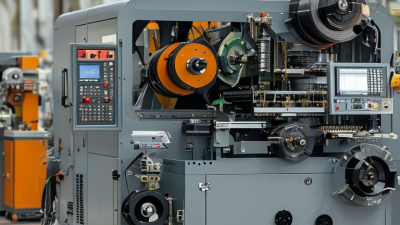
An automatic wire coiling machine forms straight wire into consistent coils with limited manual handling. It usually includes a feeding unit, straightening rollers, a coiling head, and a cutting system. The operator enters settings such as wire diameter, coil inside diameter, pitch, and required length. Sensors monitor feeding speed and coil position during production. The result is repeatable.

In practical production, the machine can process copper, steel, aluminum, and other suitable wires, depending on its design. A well-adjusted system creates neat coils without sharp deformation or loose turns. This matters when coils are used for springs, electrical parts, cable assemblies, or industrial packaging. I have found that feeding accuracy often affects quality more than maximum speed. Small roller marks can become visible after thousands of cycles.

When comparing automatic wire coiling machines in China, buyers should inspect control functions, tooling changes, safety guards, and after-sales technical support. Ask for sample coils made with your actual wire. Check the coil diameter at several points, not just one. The fastest machine may not be the best choice. Some equipment performs well in demonstrations but needs frequent adjustment in daily production. That is an important weakness to consider. A reliable machine should offer stable tension control, clear operating instructions, and accessible replacement parts. Production data, maintenance records, and operator feedback can reveal more than attractive specifications.

How Does an Automatic Wire Coiling Machine Work?

What Is the Best Automatic Wire Coiling Machine in China?

An automatic wire coiling machine converts continuous wire into measured, repeatable coils. The best choice depends on wire diameter, insulation, coil pitch, speed, and bundle shape. Grand View Research valued the industrial automation market at about USD 205.86 billion in 2022. Its forecast indicates strong growth through 2030. Automation is expanding, but it does not guarantee perfect coils.

The process starts with a payoff reel. A tension controller feeds wire through straightening rollers. An encoder measures length continuously. A servo motor rotates the mandrel while a guide places each turn beside the last one. When the programmed length is reached, the cutter stops the feed. A tying, taping, or ejecting unit secures the coil. Sensors monitor wire presence, tension, door position, and finished diameter. The PLC compares signals with target values and adjusts speed within milliseconds. Small details matter. A dirty guide can scratch insulation. Excessive tension can deform soft copper.

The International Federation of Robotics reported 541,302 industrial robots installed worldwide in 2023. This figure reflects broader factory automation demand. However, wire-processing equipment requires more than speed. Test scrap rate, changeover time, diameter variation, and operator access. A fast machine may waste material. That assumption needs testing. When evaluating Chinese equipment, request sample coils, calibration records, control-system documentation, and service response data. The strongest machine remains stable after eight hours, not only during a showroom demonstration.

Which Features Define the Best Machine in China?

What Is the Best Automatic Wire Coiling Machine in China?

Which Features Define the Best Machine in China?

The best automatic wire coiling machine is not judged by speed alone. In real factory trials, stable tension often matters more than maximum output. A strong machine should guide wire smoothly without flattening insulation or creating uneven loops. Servo-driven feeding, adjustable coiling diameter, and accurate length control support consistent results. Small errors become expensive during long production runs.

Operator safety also deserves close attention. Look for enclosed moving parts, emergency stops, clear controls, and simple access for maintenance. A practical machine should change coil sizes quickly, preferably through digital settings rather than repeated mechanical adjustments. It should also record production data, fault codes, and maintenance intervals. Clear manuals and responsive technical support reveal a supplier’s professional reliability.

Do not trust impressive numbers alone. Ask for sample testing with your actual wire, insulation, diameter, and target coil shape. Check the finished coils by measuring length, inner diameter, weight, and winding tightness. Electrical documentation and safety compliance records should be available before purchase. No machine is perfect. Some systems may need extra calibration when wire materials change, and that limitation should be discussed honestly. A careful buyer should inspect spare-part availability, training quality, and service response time before making a final decision.

How to Compare Chinese Wire Coiling Machine Manufacturers?

What Is the Best Automatic Wire Coiling Machine in China?

How to Compare Chinese Wire Coiling Machine Manufacturers?

Comparing Chinese wire coiling machine manufacturers requires more than checking price or advertised speed. Begin with your wire diameter, coil inner diameter, outer diameter, material, and required production rate. A machine designed for thin copper wire may perform poorly with rigid steel wire. Ask each manufacturer to run your actual material through a trial machine. Inspect the coil shape, winding tension, cut position, and restart accuracy.

Factory experience matters. Review engineering drawings, quality procedures, and previous installations with similar wire specifications. A reliable supplier should explain its motor system, tension control, PLC settings, and safety structure clearly. Request videos from real production lines, not only polished demonstrations. Check whether electrical components, bearings, and sensors are easy to replace locally. Small details can stop a factory for days.

Do not trust speed alone.

Compare the complete cost, including tooling, training, shipping, installation, spare parts, and service response. Ask for a written acceptance standard with measurable tolerances. During evaluation, record noise, vibration, wire breakage, and changeover time. A lower quotation may hide expensive adjustments later. I have seen technically impressive machines struggle because operators received limited training. That weakness is easy to overlook. It is also worth admitting that no supplier comparison is perfect; sample results may change with humidity, operator skill, and wire quality. Choose the manufacturer that documents these limitations and offers practical support, not merely the fastest specification.

What Is the Best Automatic Wire Coiling Machine in China? - How to Compare Chinese Wire Coiling Machine Manufacturers?
The technical ranges below are typical market benchmarks for automatic wire coiling equipment. Actual performance depends on wire material, diameter, coil geometry, tooling, feeding method, and product tolerances.
Comparison Dimension Typical Benchmark Why It Matters How to Verify the Manufacturer Recommended Weight
Applicable Wire Diameter Fine-wire machines: approximately 0.20–1.00 mm
Medium-wire machines: approximately 0.80–3.00 mm
Heavy-wire machines: approximately 2.00–6.00 mm
The machine must cover the complete production range without excessive tooling changes or unstable feeding. Request a written wire-diameter range, material compatibility list, and test results using the buyer’s actual wire. 15%
Coil Outside Diameter Small precision coils: approximately 3–30 mm
General-purpose coils: approximately 10–80 mm
Large coils: approximately 30–150 mm
Maximum and minimum coil diameter affect the forming head, guide system, tooling design, and machine stability. Compare the stated diameter range with approved sample drawings, including minimum diameter, maximum diameter, pitch, and free length. 10%
Production Speed Fine-wire applications: approximately 30–150 coils/min
Medium-wire applications: approximately 15–80 coils/min
Heavy-wire applications: approximately 5–30 coils/min
Rated speed alone can be misleading; usable output must include setup time, inspection, scrap, and stoppages. Ask for a factory acceptance test showing sustained output, scrap rate, changeover time, and the exact product configuration. 15%
Forming and Control Capability Servo-driven feeding and forming, programmable pitch, adjustable turns, automatic cut-off, and recipe storage are common requirements for flexible production. Independent control of feeding, forming, pitch, and cutting improves repeatability across different coil designs. Review the machine layout, servo-axis list, control sequence, available recipes, and demonstration of at least three different coil specifications. 15%
Dimensional Accuracy A practical target is repeatability within the tolerance stated on the approved product drawing. Common controlled dimensions include coil diameter, pitch, free length, and end geometry. Accuracy must be judged against the product tolerance rather than a general marketing claim. Require a measurement report based on a statistically meaningful sample, with calibrated instruments and clearly defined inspection points. 15%
Material Compatibility The machine should be evaluated with the actual material, such as carbon steel, stainless steel, copper alloy, or other specified wire types. Different materials have different hardness, elasticity, surface finish, and springback behavior, which can change forming performance. Send production wire samples and request trial coils, process parameters, surface inspection, and a record of wire breakage or scratching. 10%
Automation and In-Line Inspection Useful options include automatic wire feeding, straightening, cut-to-length, coil collection, vision inspection, and fault alarms. Higher automation can reduce labor requirements and improve consistency, but only when the added systems are properly integrated. Confirm the complete process flow, sensor list, rejection method, data-recording capability, and manual intervention points. 8%
Electrical and Safety Compliance The machine should have documented risk controls, emergency stops, guarding, electrical drawings, and applicable conformity documentation. IEC 60204-1 is a commonly referenced machinery electrical-safety standard. Safety documentation supports installation, operator training, export clearance, and long-term maintenance. Request the risk assessment, electrical schematic, safety-circuit description, user manual, and applicable conformity certificates before purchase. 7%
Tooling Changeover A well-designed production setup should provide documented changeover procedures, repeatable tooling positions, and stored parameter recipes. Short and predictable changeovers are important when producing multiple coil sizes or small batches. Measure the complete changeover from the last good part to the first approved part, including tooling adjustment and parameter verification. 5%
Service, Spare Parts, and Warranty A clear warranty period, remote troubleshooting process, spare-parts list, maintenance schedule, and response-time commitment should be provided in writing. After-sales support directly affects uptime, especially for customized machines and export installations. Check the service agreement, spare-parts pricing, software-support policy, training scope, installation method, and escalation process. 10%
Total Cost of Ownership Evaluate purchase price together with tooling, freight, installation, training, energy use, consumables, spare parts, maintenance, and expected scrap. The lowest initial quotation may have a higher long-term cost if output, accuracy, or service availability is inadequate. Request a five-year cost model and compare quotations using the same product samples, output target, tooling scope, and acceptance criteria. 10%
Factory Verification The supplier should be able to demonstrate a functioning machine, documented quality procedures, traceable assembly, and completed trials for comparable applications. Factory verification reduces the risk of purchasing an unproven design or relying only on catalogue specifications. Arrange a live video or on-site audit covering assembly, testing, quality control, machine records, and production of the buyer’s own samples. 10%
Suggested Evaluation Method: Score each criterion from 1 to 5, multiply the score by the recommended weight, and compare only suppliers that pass the sample-production test and safety-document review. The best machine is the one that consistently meets the required product tolerance and usable output at the lowest total cost of ownership—not necessarily the machine with the highest advertised speed.

How to Choose the Right Machine for Your Production Needs?

Choosing the best automatic wire coiling machine in China starts with your production facts, not a catalog speed claim. Measure wire diameter, material, coil inner diameter, outer diameter, pitch, and required monthly volume. Grand View Research estimated the global wire and cable market at about US$216 billion in 2023, showing why flexible equipment matters across many applications. Your machine should handle today’s products and realistic future variations.

In factory trials, I would test the smallest and largest wire sizes first. Watch tension stability, coil shape, feeding accuracy, changeover time, and scrap rate. A machine rated at 3,000 coils per hour may perform poorly with stiff insulation or irregular wire. It sounds impressive. It may not fit your process. Ask for sample production using your actual wire, not supplied demonstration material.

Control quality also deserves attention. The International Federation of Robotics reported 541,302 industrial robots installed worldwide in 2023. That figure reflects growing automation, but automation only works when operators can adjust it safely and consistently. Check servo response, recipe storage, sensor reliability, guarding, emergency stops, and maintenance access. Request data on uptime, noise, compressed-air use, and spare-part availability. A lower purchase price can become expensive after repeated setup errors. I would also leave room for human judgment; some unusual coils still need skilled inspection.

How to Choose the Best Automatic Wire Coiling Machine in China

Use the following production-planning weights to compare automatic wire coiling machines. The priorities reflect common manufacturing requirements: output capacity, wire-size compatibility, coil accuracy, changeover efficiency, automation, and operating cost.

Selection guidance: Prioritize output capacity for high-volume production, wire-size range for diverse orders, and coil accuracy for strict dimensional requirements. A machine with faster changeover and higher automation is generally more suitable for frequent product changes and reduced manual handling.