What Is an Automatic Stator Winding Machine?
Understanding an automatic stator winding machine begins with the copper wire, not the control panel. This equipment places insulated wire into stator slots with controlled speed, tension, and positioning. It supports motors used in appliances, pumps, compressors, electric vehicles, and industrial equipment. The machine may appear simple from outside. Inside, servo drives, guide needles, sensors, and programmable controls must work together precisely.
Motor-manufacturing specialist Dr. Elena Marquez explains, “A winding machine is only as reliable as its control of wire tension, placement, and repeatability.” Her observation reflects a practical truth. Even a small tension change can create loose coils, damaged insulation, or uneven resistance. The result may appear acceptable during production. Testing can reveal hidden weaknesses later.
An automatic stator winding machine usually performs coil insertion, winding, indexing, and sometimes wire termination. Its exact functions depend on the stator design and production target. High-speed operation is valuable, but speed alone is not quality. A careful setup often matters more. Operators still check tooling, wire diameter, slot dimensions, and sample windings. Automation reduces repetitive work, yet it does not eliminate judgment.
The process is not perfect.
Different motors require different winding patterns, and one machine cannot solve every manufacturing problem. Maintenance also matters. A worn guide nozzle can disturb a precise coil within minutes. This article examines how these machines operate, where they are used, and which technical details influence performance. It also considers their limitations, because practical engineering begins with accurate expectations.
What Is an Automatic Stator Winding Machine?
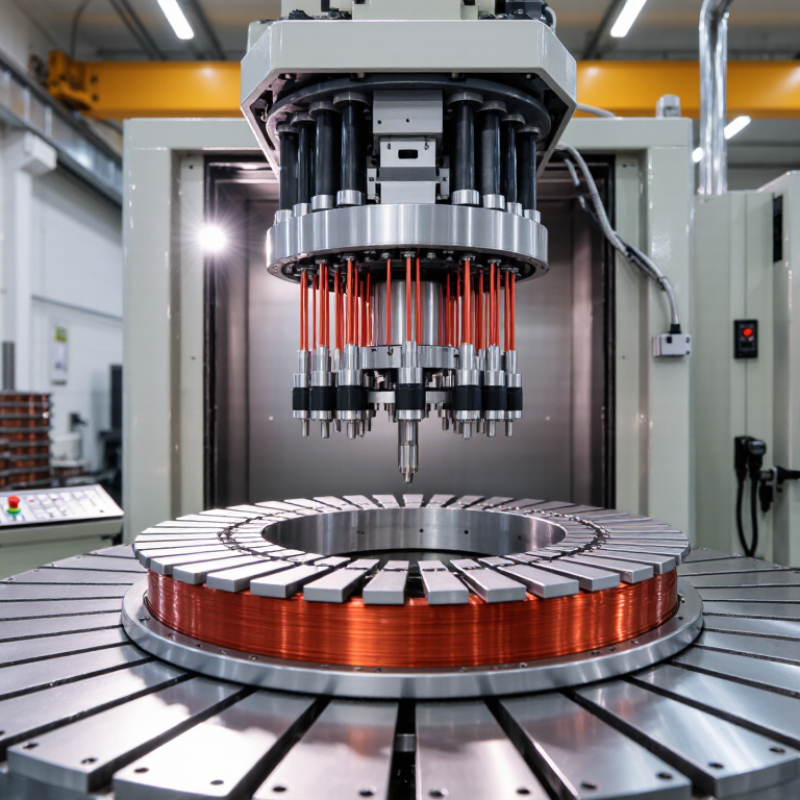
What Is an Automatic Stator Winding Machine? It is industrial equipment that places insulated copper wire into a motor stator with programmed control. The machine guides, tensions, cuts, and arranges the wire around prepared slots. Unlike manual winding, it repeats each movement with consistent speed and positioning. A typical system includes a winding head, wire tensioner, slot tooling, servo drives, and a control panel. The stator remains firmly supported during the cycle.
In practical production, the operator loads a core and selects a verified winding program. The machine then follows a set pattern for turns, coil span, and wire placement. Sensors can detect missing wire, abnormal tension, or an incomplete cycle. These checks reduce defects, but they do not replace skilled inspection. A loose guide may damage enamel insulation. A small alignment error can create uneven coils and affect motor performance. It happens.
Reliable operation depends on correct tooling and careful setup. Engineers usually confirm wire diameter, slot dimensions, insulation thickness, and required winding turns before production. They also inspect sample stators under magnification and measure electrical resistance. Keeping the wire path clean matters more than many new operators expect. Dust, worn nozzles, or incorrect tension can produce hidden weaknesses. Automatic does not mean maintenance-free. In my experience, rushed parameter changes often create more waste than slow, documented adjustments. The best process leaves records for each batch, while still allowing technicians to question results that look unusual.
How an Automatic Stator Winding Machine Works
What Is an Automatic Stator Winding Machine?
An automatic stator winding machine places insulated copper wire into a motor stator with controlled speed and tension. Unlike manual winding, it coordinates the spindle, wire guide, indexing table, and cutting system. The operator loads the stator, selects a verified winding program, and checks the wire path before production begins. It is not magic.
How an Automatic Stator Winding Machine Works
The process starts when the machine clamps the stator and identifies its winding position. A servo motor rotates the stator or winding tool, while a guide nozzle directs wire into each slot. The controller follows programmed turns, coil pitch, wire diameter, and winding direction. A tension unit keeps the copper wire tight without scraping its insulation. Small errors matter.
Sensors can detect broken wire, abnormal tension, missing turns, or incorrect positioning. When a fault appears, the machine can pause before damaging more coils. After each coil, the system may form end turns, cut the wire, and prepare the lead for termination. Technicians then inspect slot fill, coil shape, insulation condition, and electrical resistance. In production work, visual inspection alone is not enough.
The machine improves repeatability, but setup quality still controls the result. A worn guide, loose fixture, or incorrect tension value can create uneven coils. In my view, automatic winding should be treated as a controlled process, not a push-button shortcut. Trial runs, measured samples, and regular calibration expose problems that software may miss.
What Is an Automatic Stator Winding Machine? - How an Automatic Stator Winding Machine Works
| Data Dimension | Typical Information | How It Relates to Machine Operation |
|---|---|---|
| Machine definition | An automated production system that places insulated copper wire into the slots or around the teeth of a motor stator. | It combines wire feeding, tension control, guided movement, winding, and process monitoring with limited manual intervention. |
| Main winding methods | Needle winding, flyer winding, and direct winding are commonly used methods. | The selected method depends on stator geometry, slot design, winding pattern, wire diameter, and required production rate. |
| Typical workpiece | Slotted stator cores made from stacked electrical-steel laminations. | The core is accurately positioned so the winding head can follow the programmed slot and coil sequence. |
| Wire material | Enamel-insulated copper wire is the most common conductor; aluminum wire is used in selected motor designs. | The wire type and diameter determine tension settings, tooling requirements, electrical resistance, and allowable winding speed. |
| Core loading | The stator is placed in a fixture, clamped, and aligned with the winding axis. | Correct alignment reduces wire rubbing, uneven coil placement, and damage to the insulation system. |
| Wire feeding | A controlled feed path guides wire from the supply package through tensioners, guides, and the winding head. | Stable feeding helps maintain consistent coil geometry and prevents slack, kinks, and excessive mechanical stress. |
| Tension control | Closed-loop or regulated mechanical tension systems are used to keep wire tension within a programmed range. | Consistent tension improves packing density and helps protect the enamel coating from stretching or abrasion. |
| Winding motion | Servo-driven axes coordinate spindle rotation, winding-head travel, and stator indexing. | Coordinated motion places each turn according to the programmed coil pitch, direction, and sequence. |
| Programmable winding data | Common settings include turns per coil, winding speed, wire tension, indexing angle, acceleration, and dwell time. | The control program allows the same machine to produce different winding patterns after suitable tooling and parameter changes. |
| Common production range | Many machines are configured for small and medium motor stators, with wire diameters commonly ranging from about 0.1 mm to 1.5 mm. | Actual capability depends on the winding method, tooling, stator size, wire enamel, and machine configuration. |
| Typical speed factor | Winding speed is commonly specified in revolutions per minute or wire travel rate; practical values vary widely by application. | Higher speed is possible only when wire tension, insulation protection, coil placement, and motor acceleration remain within safe limits. |
| Wire termination | The system may perform lead preparation, wire cutting, stripping, clamping, or termination depending on the production line design. | Controlled termination ensures that the coil leads are available for subsequent connection, soldering, or welding processes. |
| Quality monitoring | Sensors and control software can monitor wire breakage, tension deviations, position errors, cycle status, and selected electrical results. | Monitoring helps detect defects during production instead of relying only on final inspection. |
| Post-winding operations | Typical downstream processes include coil forming, lacing or tying, insulation insertion, lead connection, impregnation, and electrical testing. | Winding is one stage of stator manufacturing and normally works together with forming, insulation, and testing equipment. |
| Key advantages | Repeatable coil placement, reduced manual handling, improved production traceability, and consistent winding parameters. | Automation can improve process consistency and throughput when the stator design, tooling, and parameters are properly matched. |
Note: Technical ranges are representative industry values. Actual performance depends on stator dimensions, winding topology, wire specification, tooling, and machine configuration.
Main Components of an Automatic Stator Winding Machine
What Is an Automatic Stator Winding Machine?
An automatic stator winding machine forms copper wire into precise coils inside a motor stator. Its main components work together to control speed, tension, position, and coil shape. The machine frame provides stability during operation. A servo-driven spindle rotates the stator or winding tool with controlled movement. Wire guides direct the copper wire through each slot. A tensioning unit keeps the wire tight without damaging its enamel coating.
The control system is the machine’s working center. It includes a programmable controller, touch screen, sensors, and motion modules. Sensors detect wire breaks, incorrect positions, and abnormal tension. Clamping fixtures hold the stator firmly during winding. Interchangeable tooling can support different stator sizes and coil patterns. In practice, tooling alignment is easy to underestimate. A small offset may create uneven coils or increase insertion resistance. Quality checks should measure coil height, wire tension, and winding count.
Tips: Keep the wire path clean and inspect guides before each shift. Check tension with a calibrated device, not only by appearance. Store winding programs with clear version labels. Operators should also listen for irregular vibration. It may reveal loose fixtures or worn bearings. No setup is perfect. Regular review still matters. A reliable machine depends on accurate components, careful maintenance, and realistic process testing.
Types of Stator Winding Operations
What Is an Automatic Stator Winding Machine?
Types of Stator Winding Operations
An automatic stator winding machine places insulated copper wire into motor stator slots with controlled speed and tension. Its work extends beyond winding. It can guide, cut, insert, form, lace, and test coils within one production line. That detail matters. Poor tension may create loose turns, damaged enamel, or uneven slot filling.
The main operation types include concentrated winding, distributed winding, and flyer winding. Concentrated winding suits compact motors and simple pole structures. Distributed winding spreads coils across several slots, improving magnetic performance and reducing torque ripple. Flyer winding supports high-speed coil production, while needle winding places wire directly into narrow stator slots. Some systems also perform coil insertion, slot insulation placement, end-turn forming, and lacing. Each process needs different tooling and control settings.
According to the International Energy Agency, electric motor systems consume roughly half of global electricity. The U.S. Department of Energy’s Motor Systems Market Assessment reports that motor-driven equipment uses about 68% of electricity in U.S. manufacturing. These figures explain why winding accuracy affects more than factory output; it influences motor efficiency and operating cost. In production, engineers commonly monitor wire tension, winding count, insertion force, insulation resistance, and phase balance. Automated inspection improves traceability, but it is not flawless. A sensor can miss early enamel damage. Human review still has value during setup, maintenance, and unusual failures.
Applications and Selection Factors for Stator Winding Machines
What Is an Automatic Stator Winding Machine?
An automatic stator winding machine places insulated copper wire into stator slots with programmed movement. It controls wire tension, winding speed, turns, and coil positioning. Compared with manual winding, it can improve repeatability in high-volume motor production. A typical cycle includes wire feeding, coil forming, insertion, and cutting. Operators still inspect insulation and terminal connections. Automation reduces variation, but it does not remove every production risk.
Applications and Selection Factors for Stator Winding Machines
These machines support motors used in pumps, fans, compressors, appliances, and industrial equipment. Different applications require different winding methods. A compact fan motor may need rapid coil insertion. A high-torque motor may require thicker wire and tighter tension control. Production teams should match the machine with stator diameter, slot shape, wire size, winding pattern, and target output. Tooling flexibility also matters when several motor models share one line.
Check the control system, sensor accuracy, changeover time, and maintenance access. Ask for documented test results using your actual stator samples. Laboratory claims can appear impressive. Factory conditions are less forgiving. Dust, wire stiffness, and operator handling may change performance. Energy use and spare-part availability deserve attention as well. A faster machine is not always better. Excessive speed can damage enamel or create uneven coils. Engineers should review rejection data after installation, not only the first successful trial. Small setup errors often become expensive quality problems.
Related Posts
-
China Top 10 Motor Winder Machine Manufacturers?
-
Why Choose an Automatic Stator Winding Machine?
-
Why Choose a Motor Stator Winding Machine?
-
2026 Top Stator Winding Machine Types for Global Buyers
-
China Top Motor Winder Machine Suppliers and Prices
-

10 Essential Tips for Choosing the Best Auto Winding Machine?