
How to Choose the Best Chocopie Cake Production Line?
Choosing the right Chocopie Cake Production Line requires more than comparing machine prices. It demands a clear view of capacity, product quality, hygiene, labor, and future expansion. A line that produces 10,000 pieces per hour may look attractive, yet it can become inefficient when orders fall or product sizes change.
Market evidence supports careful planning. Grand View Research reported that the global bakery products market was valued at approximately USD 594.3 billion in 2023. It also expects continued growth through 2030. This expansion increases pressure on manufacturers to improve consistency and operating efficiency. Meanwhile, PMMI’s packaging industry reports repeatedly identify automation, flexible production, and sustainable packaging as major investment priorities. These trends directly influence cake forming, baking, cooling, coating, filling, and packaging equipment.
Details matter.
A reliable Chocopie Cake Production Line should match the recipe’s moisture level, filling viscosity, coating temperature, and required output. For example, poor cooling control can create condensation beneath the chocolate layer. That small defect may later cause cracking, sticking, or shortened shelf life. Experienced suppliers should provide factory testing, production samples, sanitation procedures, spare-parts support, and measurable energy data. Their claims should be checked, not simply accepted.
No single line fits every factory. This is where many buyers misjudge the decision. A cheaper system may require more manual handling, while an advanced system may remain underused. The best choice balances present demand with realistic growth. This guide explains how to compare equipment layouts, automation levels, technical specifications, supplier credibility, and total ownership costs before signing a purchase agreement.
Understanding Chocopie Cake Production Requirements
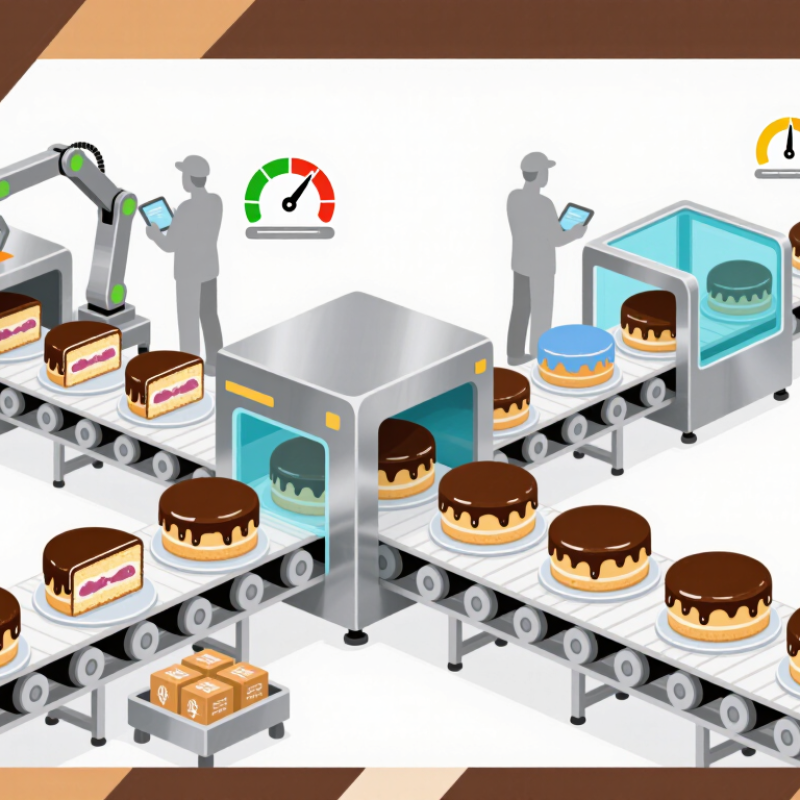
Choosing a chocopie cake production line starts with the product, not the machine list. A typical cake requires mixing, depositing, baking, cooling, filling, sandwiching, chocolate coating, final cooling, inspection, and wrapping. Each stage changes the next one. For example, a soft filling can deform warm cakes, while excessive cooling may reduce coating adhesion. The line must control batter weight, baking temperature, filling volume, coating thickness, and cooling time.
Food loss deserves serious attention. The FAO’s 2019 report estimates that 14% of food is lost globally between harvest and retail. In a chocopie facility, small process errors multiply quickly. A 2-gram filling variation across 20,000 pieces wastes about 40 kilograms of material. Operators should therefore request trial data for weight accuracy, product rejection, and changeover time.
PMMI industry reports also identify labor availability and automation as major packaging concerns. Servo-driven depositing, automatic alignment, and vision inspection can reduce repetitive adjustments, but they cannot repair poor recipes.
Do not trust impressive speed alone. A line rated at 600 pieces per minute may run slower with sticky filling, uneven cake sizes, or frequent cleaning. Hygienic design, accessible belts, allergen controls, and reliable temperature records matter more than a perfect brochure. I would test the full recipe under realistic humidity and shift conditions. That test may expose an inconvenient truth: the cheapest line is sometimes the most expensive choice after waste, downtime, and manual rework are counted.

Evaluating Key Production Line Components and Functions
How to Choose the Best Chocopie Cake Production Line?
A reliable chocopie line should match the recipe, output target, and factory layout. I inspect each component as part of one connected process, not as isolated equipment. The batter depositor must deliver consistent weight and shape. Small variations can cause uneven baking and filling problems. Adjustable settings are valuable when recipes or product sizes change.
The tunnel oven needs stable temperature control across every heating zone. Check baking time, airflow, insulation, and access for cleaning. A soft, even cake depends on these details. The cooling conveyor should reduce product temperature without drying the surface. The cream depositor also needs accurate dosing and gentle handling. Excess pressure may damage the cake layers. Sensors should detect gaps, misalignment, and product buildup before stoppages occur.
The coating unit must spread chocolate evenly around each cake. Ask how quickly operators can adjust the curtain, temperature, and conveyor speed. Packaging equipment should protect the coating without squeezing the product. Tool-free access can shorten inspection time, although it may increase the purchase price. I once underestimated changeover time during a line comparison. The equipment looked efficient, but cleaning and adjustment took longer than expected. That experience changed my evaluation method. I now request trial runs using the actual recipe, packaging film, and production speed. Energy use, spare-part availability, safety guarding, and operator training also deserve careful review. A lower initial cost can become expensive when downtime grows.
How to Choose the Best Chocopie Cake Production Line? – Evaluating Key Production Line Components and Functions
| Production Line Component | Primary Function | Typical Technical Range | Key Evaluation Points | Effect on Product Quality | Priority | Suggested Check |
|---|---|---|---|---|---|---|
| Ingredient Dosing System | Measures flour, sugar, cocoa, fats, leavening agents, and other ingredients before mixing. | Batch accuracy: approximately ±0.5% to ±1.0%; stainless-steel contact parts. | Check weighing accuracy, recipe management, dust control, load-cell stability, and ease of cleaning. | Consistent flavor, color, texture, and cake volume from batch to batch. | High | Run repeated weighing tests with major and minor ingredients. |
| Batter Preparation Mixer | Combines dry and liquid ingredients while developing a uniform cake batter. | Common vessel sizes: about 100–500 L; variable-speed mixing is preferred. | Evaluate mixing speed range, scraper design, temperature control, discharge efficiency, and cleaning access. | Reduces lumps and air variation, supporting uniform cake thickness and softness. | High | Compare batter density and viscosity at different mixing times. |
| Batter Depositor | Deposits a controlled quantity of batter onto trays or a continuous baking belt. | Typical portion tolerance: about ±1% to ±2%; servo-driven systems offer precise control. | Check nozzle accuracy, deposit speed, anti-drip performance, recipe changeover, and compatibility with batter viscosity. | Maintains consistent cake weight, diameter, height, and baking behavior. | High | Measure the weight and dimensions of at least 30 consecutive pieces. |
| Industrial Baking Oven | Bakes the deposited batter to the required internal structure, color, and moisture level. | Multi-zone temperature control; common operating range approximately 160–220°C, depending on recipe. | Assess temperature uniformity, airflow control, belt speed adjustment, insulation, energy use, and exhaust management. | Controls crumb structure, browning, moisture retention, and resistance to deformation. | Critical | Map temperatures across the oven and verify core moisture after baking. |
| Cooling Conveyor | Cools baked cake shells before cream filling and chocolate coating. | Cooling residence time often ranges from 10–30 minutes, depending on product size and airflow. | Check conveyor length, airflow uniformity, ambient-temperature control, belt hygiene, and product spacing. | Prevents cream melting, coating defects, condensation, and shape distortion. | High | Confirm cake temperature is stable before filling, usually near room temperature. |
| Cream Filling Unit | Deposits a controlled layer of cream or filling between two cake shells. | Filling accuracy commonly targeted within approximately ±1% to ±2%; filling temperature varies by formula. | Evaluate pump accuracy, filling pressure, nozzle design, layer thickness control, and product-loss rate. | Provides balanced taste, secure bonding, and a consistent bite without leakage. | Critical | Inspect filling distribution through cross-sections at different line speeds. |
| Cake Sandwiching and Aligning System | Places the top cake shell accurately over the filled bottom shell. | Alignment accuracy commonly targeted within a few millimeters, depending on product size. | Check product handling, gentle transfer, size adjustment, jam prevention, and synchronization with the filler. | Improves appearance and prevents exposed filling or uneven edges. | High | Inspect alignment at minimum, nominal, and maximum operating speeds. |
| Chocolate Coating Enrober | Covers the assembled cake with a continuous layer of chocolate or compound coating. | Coating thickness is often adjustable at approximately 1–3 mm; temperature depends on coating type. | Evaluate curtain stability, bottoming capability, coating temperature control, belt speed, and recirculation filtration. | Determines shell appearance, bite, coating coverage, and resistance to cracking. | Critical | Check coating weight, surface gloss, coverage, and drip formation. |
| Cooling Tunnel | Sets and stabilizes the chocolate coating before packaging. | Typical cooling residence time: approximately 8–20 minutes; multiple temperature zones are beneficial. | Check temperature zoning, airflow direction, condensation prevention, belt tracking, and access for sanitation. | Creates a firm, smooth coating and reduces sticking during packaging. | Critical | Verify coating hardness and surface condition at the tunnel exit. |
| Metal Detector and Checkweigher | Detects metallic contamination and verifies finished-product weight before packing. | Detection sensitivity depends on aperture size, product effect, and applicable food-safety requirements. | Assess calibration controls, reject confirmation, data recording, belt synchronization, and hygienic design. | Supports food safety, regulatory compliance, and accurate net-weight control. | Critical | Perform documented challenge tests and weight verification during production. |
| Primary Packaging Machine | Wraps individual Chocopie-style cakes in film and seals the package. | Typical speed: approximately 80–300 pieces per minute, depending on package format and product size. | Check sealing temperature range, film compatibility, gas-flush options, changeover time, and reject handling. | Protects freshness, prevents contamination, and improves shelf-life performance. | High | Test seal strength, package appearance, leakage, and film tracking. |
| Secondary Cartoning and Case Packing | Groups individual packs into cartons or shipping cases for distribution. | Output depends on pack configuration; automatic systems commonly support several carton formats. | Evaluate carton changeover, product counting, case integrity, coding integration, and line synchronization. | Reduces handling damage and improves warehouse and transport efficiency. | Medium | Check pack counts, carton closure, compression strength, and changeover repeatability. |
| PLC and HMI Control System | Controls timing, speed, temperature, alarms, recipes, and communication between line modules. | Recipe storage, operator access levels, alarm history, and production-data recording are recommended. | Assess interface usability, remote diagnostics, data backup, safety interlocks, and expansion capability. | Improves process stability, traceability, troubleshooting, and repeatable production. | High | Review sample recipes, alarm records, access permissions, and recovery procedures. |
| Sanitary Design and CIP Features | Enables efficient cleaning and reduces the risk of microbiological or allergen cross-contamination. | Food-contact areas should use corrosion-resistant materials and accessible, drainable construction. | Inspect weld quality, removable parts, drainage, dead spaces, tool requirements, and cleaning documentation. | Supports hygiene, product safety, allergen management, and consistent operating conditions. | Critical | Conduct a sanitation review using a documented cleaning checklist. |
| Utilities and Energy Management | Supplies electricity, compressed air, water, refrigeration, and exhaust required by the line. | Actual demand depends on capacity; compressed air commonly requires dry, filtered air at stable pressure. | Calculate connected load, peak consumption, heat recovery options, air quality, and utility redundancy. | Influences operating cost, uptime, product stability, and facility requirements. | High | Compare utility consumption per finished product unit at the target output. |
Comparing Capacity, Automation, and Product Flexibility
Choosing the best Chocopie cake production line starts with realistic capacity, not the largest advertised number. Estimate demand by shift, season, and acceptable downtime. A line producing 6,000 pieces hourly may become inefficient when orders average 3,500. Check the full process, including baking, cooling, filling, coating, and packing. Capacity should reflect finished products, not an ideal machine test. Ask for production records and sample runs using your recipe. Small differences in cake size can affect cooling time and coating weight. This is often overlooked.
Automation reduces repetitive work, but it does not remove the need for skilled operators. Servo controls can improve portion accuracy, while sensors help detect empty trays and uneven coating. However, complicated systems may require costly troubleshooting. Review changeover time between sizes, fillings, and packaging formats. Quick-release contact parts make cleaning easier. Flexible dosing equipment matters if you plan seasonal flavors or reduced-sugar recipes. I prefer testing these changes on-site. A smooth demonstration can hide awkward maintenance. Watch operators replace pumps, adjust temperatures, and clear minor jams. These details reveal practical usability better than a brochure.
Tips: Compare hourly output at the same product weight. Request a trial with your ingredients. Measure waste, energy use, and changeover minutes. Check spare-part availability and training support. Leave room for future modules. Avoid paying for unused automation. Sometimes a simpler line performs more reliably. Document every assumption before signing, then review it after the trial.
Checking Food Safety, Quality Control, and Maintenance Features
How to Choose the Best Chocopie Cake Production Line?
Food safety should guide every equipment decision. A reliable line must protect the cake from mixing through packaging. Choose stainless steel, food-grade contact parts, and sealed conveyors. These surfaces should resist moisture and allow quick cleaning. Chocolate coating creates hidden hygiene risks when residue collects beneath belts or around nozzles. Ask for cleaning procedures, allergen controls, and traceability records. A documented hazard-control plan adds real confidence.
Quality control needs more than a final visual check. Temperature sensors should monitor baking, cooling, and chocolate coating continuously. Checkweighers can detect filling differences before products leave the line. Vision systems may identify broken shells, uneven coating, or missing packages. Data logs help operators investigate repeated defects. Still, automation is not perfect. Sensors drift, and staff can miss warning signals. Regular calibration remains essential. Maintenance features matter just as much. Look for tool-free access, clear alarms, replaceable wear parts, and safe inspection doors. A short trial run can reveal awkward cleaning points and unstable temperatures.
Estimating Investment Costs, Operating Expenses, and Supplier Support
Investment planning should start with product capacity, not machine price. A line producing 1,000 cakes per hour needs less capital than a 5,000-cake line, but may create higher labor costs. Industry forecasts support continued automation investment. MarketsandMarkets estimates that the global bakery processing equipment market could grow from about USD 15.3 billion in 2023 to USD 19.4 billion by 2028. This growth reflects demand for consistent output, hygiene, and labor efficiency.
Budgetary quotes for a complete chocopie line often range from USD 300,000 to over USD 1.5 million. The final figure depends on mixers, depositors, ovens, cooling tunnels, enrobers, packaging units, installation, and spare parts. Energy is easy to underestimate. A 2023 International Energy Agency report identifies industrial energy efficiency as a major cost-control opportunity. Ask suppliers for hourly electricity, gas, compressed-air, and water consumption. Request these figures at your intended production speed.
Operating expenses also include film waste, cleaning chemicals, maintenance, training, and rejected products. PMMI industry research repeatedly highlights labor shortages and automation as key packaging investment drivers. Supplier support matters after installation. Confirm response times, remote diagnostics, technician availability, and operator training. I would also request a factory acceptance test using your recipe and packaging materials. It reveals problems early. My own costing models are rarely perfect. Small delays at cooling or coating stages can reduce real output sharply. Leave a contingency budget of 10% to 15% for changes, integration, and early production adjustments.